
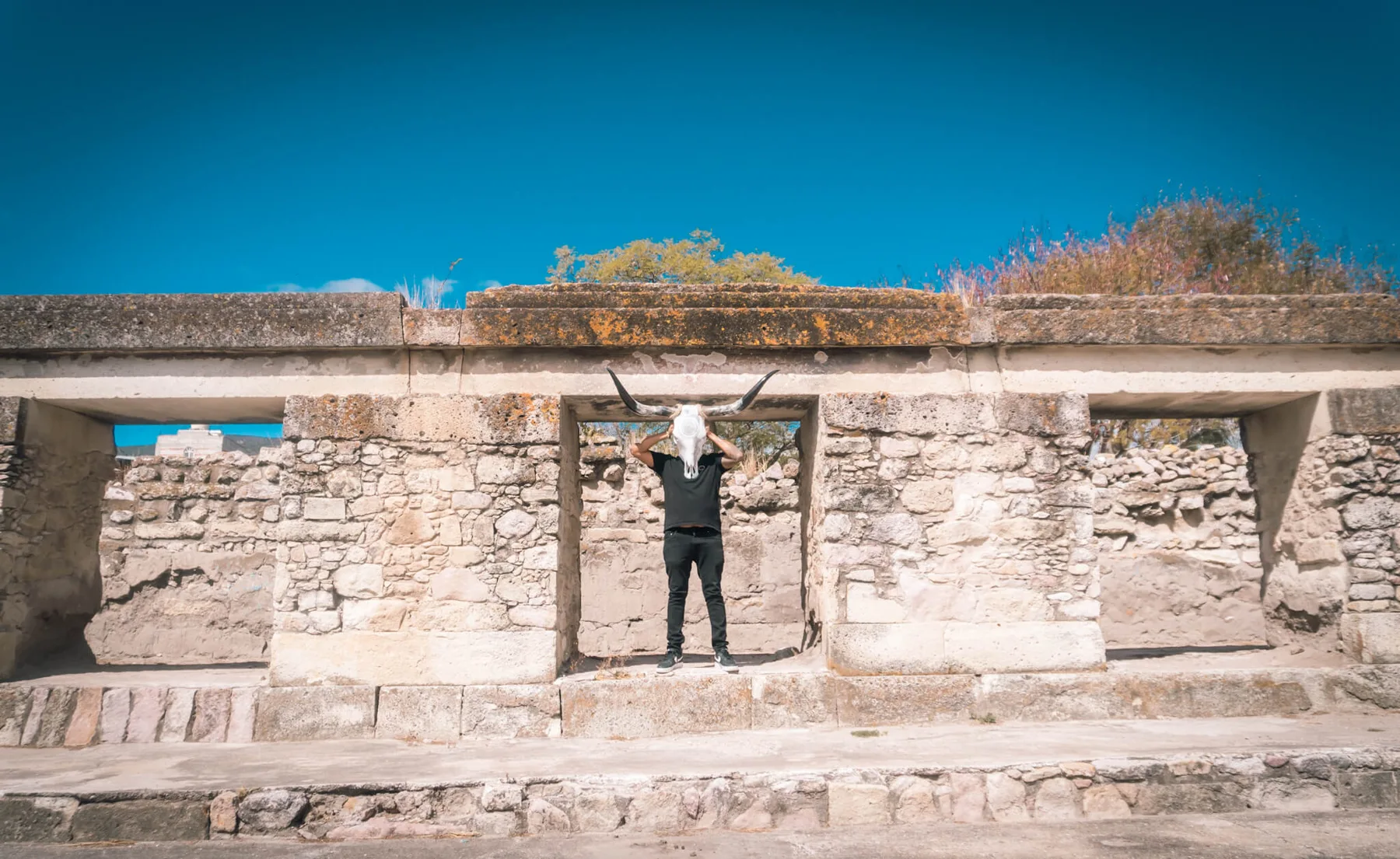
The world behind the work
Born in Mitla.
Made of memory.
Ancient stone. Bread made for an offering.
The people who taught Ricardo Quero how to see.
A place carried within
Before a line became art,
it was part of home.
To understand Ricardo’s work is to return to Mitla: to the walls he grew up beside, the elders he listened to, and the bread he learned to decorate for Día de Muertos. These experiences remain present in the pieces he creates today.
San Pablo Villa de Mitla
A childhood
among ancient walls.
Ricardo was born in Mitla, Oaxaca. Growing up among its ruins, he encountered a world of steps, spirals and repeating forms carved into stone. The grecas became part of his visual memory long before they appeared in his art.
He also found inspiration in the graffiti of contemporary streets. Ancient geometry and a living, changing town would meet in his own way of drawing.
Learning to look.
Learning to remember.
His relationship with the elders of his community shaped more than his imagery. Listening to their stories, Ricardo learned about remembrance, respect for the dead and the meaning carried by objects found in nature. Their teachings became part of the way he understands his work.
Mitla, beyond the ruins.
Mitla is both an archaeological site and a living Zapotec town. Its monumental buildings preserve elaborate geometric ornament: carefully fitted stone mosaics, carved reliefs and traces of painted surfaces. Its name, derived from the Nahuatl Mictlán, is commonly translated as “place of the dead.”
Historical context · INAH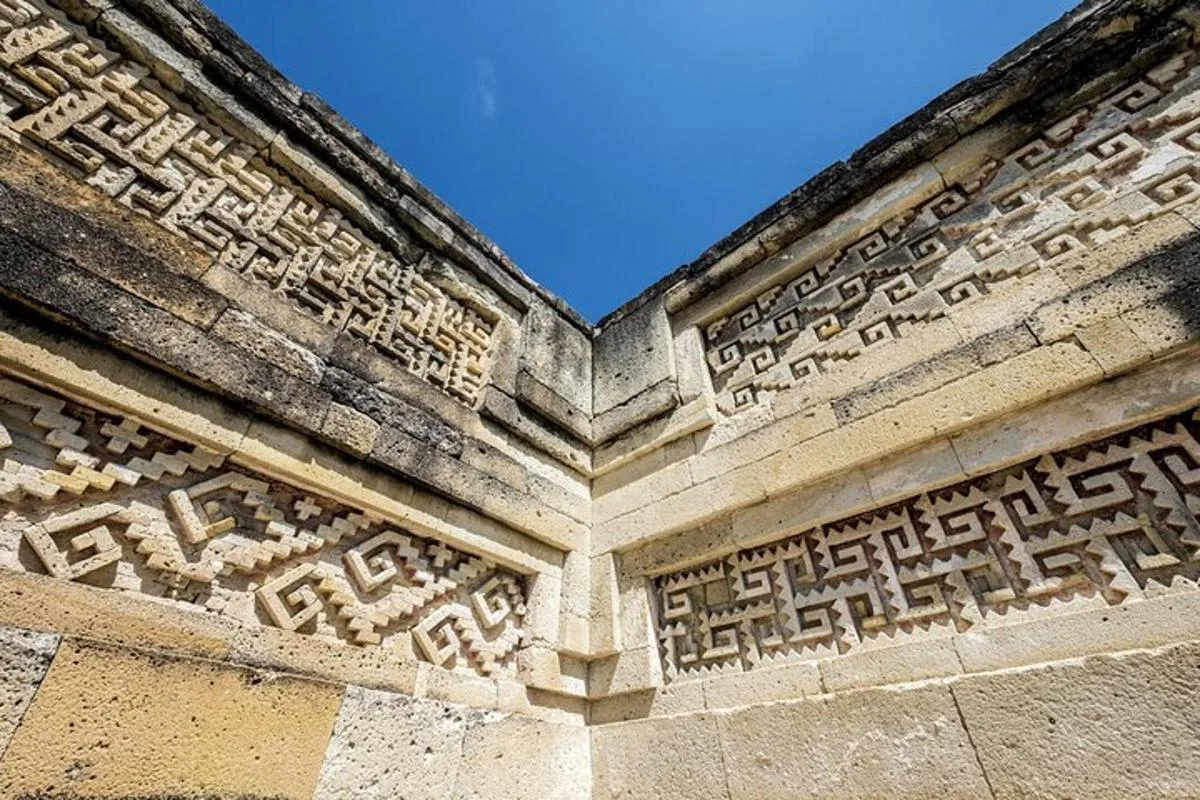
INAH places the beginnings of Zapotec settlement here around this time.
After gaining importance following Monte Albán’s decline, Mitla reaches its height.
A living Zapotec community surrounds the ancient buildings. Heritage remains part of everyday life.
From the wall
to the hand.
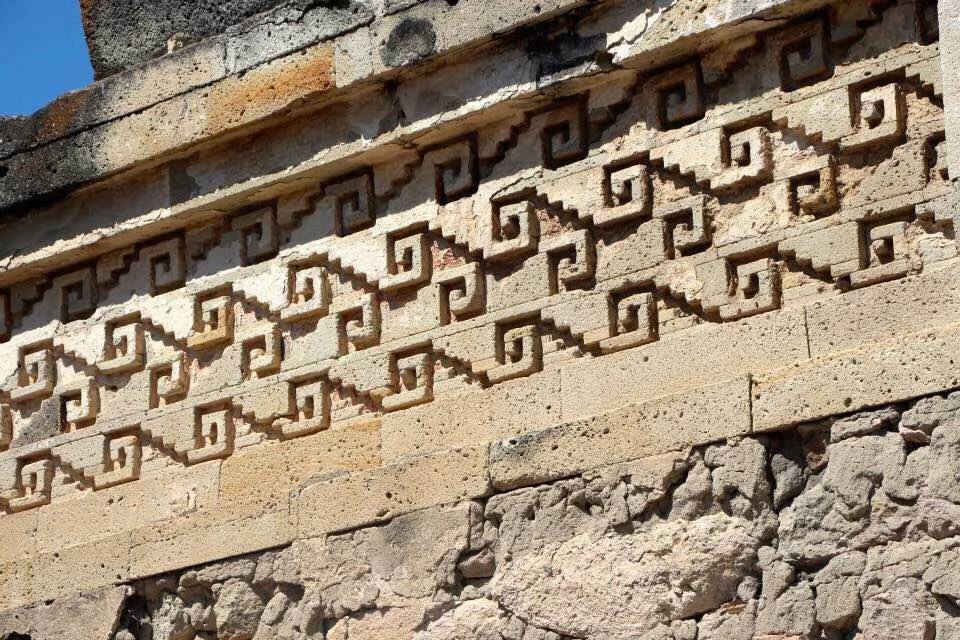
A greca is a repeating geometric ornament. The stepped fret — greca escalonada — brings together a stair-like movement and an angular turn. Look at the stonework beside Ricardo’s painted details.
Three photographs of Mitla. Three ways of looking. Select a study, follow the highlighted areas, or enlarge either photograph.
 MITLA / STONE
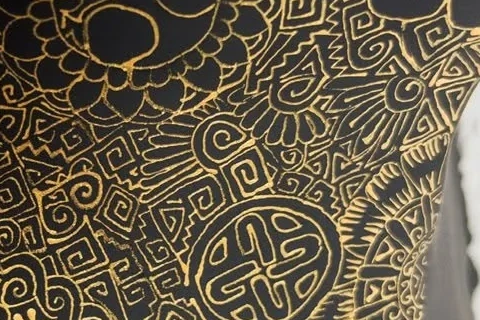 RICARDO / PAINT
Step, pause, step.
In the stonework, small right-angled steps lead into the next turn. In Ricardo’s piece, stepped edges appear among flowers and spirals. The shared structure becomes freer as it follows the curved surface.
Illustrative line study · a guide to looking
What does the stepped fret mean?
There is no single settled interpretation of this motif across Mesoamerica. INAH discusses proposed readings such as cyclical celestial movement, changing seasons and the meeting of opposites in the wider Mesoamerican context. These interpretations depend on place and period. Here, the comparison follows what can be seen — steps, turns and repetition — and Ricardo’s personal relationship with Mitla. It does not assign an identical ancient meaning to every painted form.
A tradition held in the hands
It began
with bread.
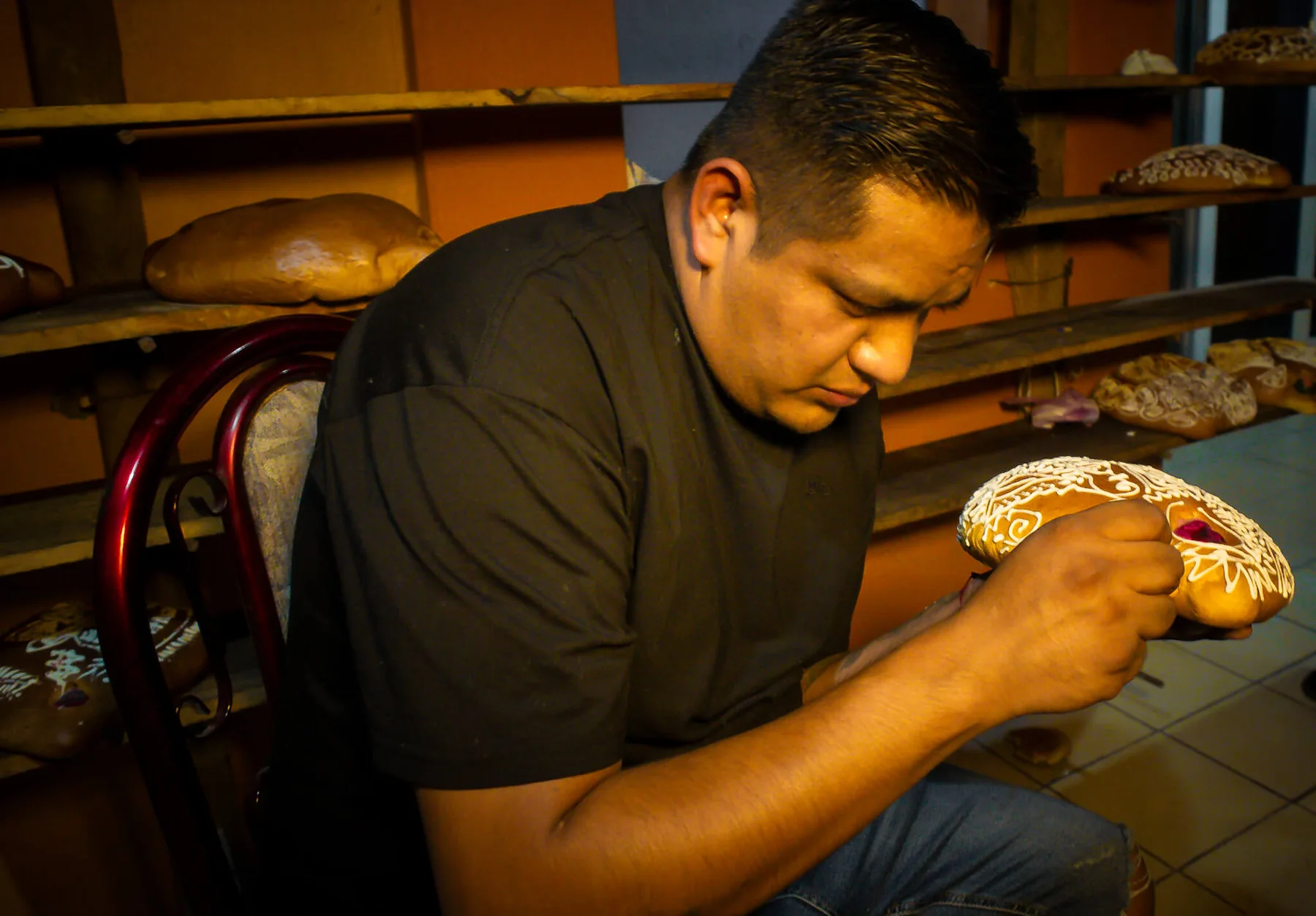
A patient gesture.
An offering for someone loved.
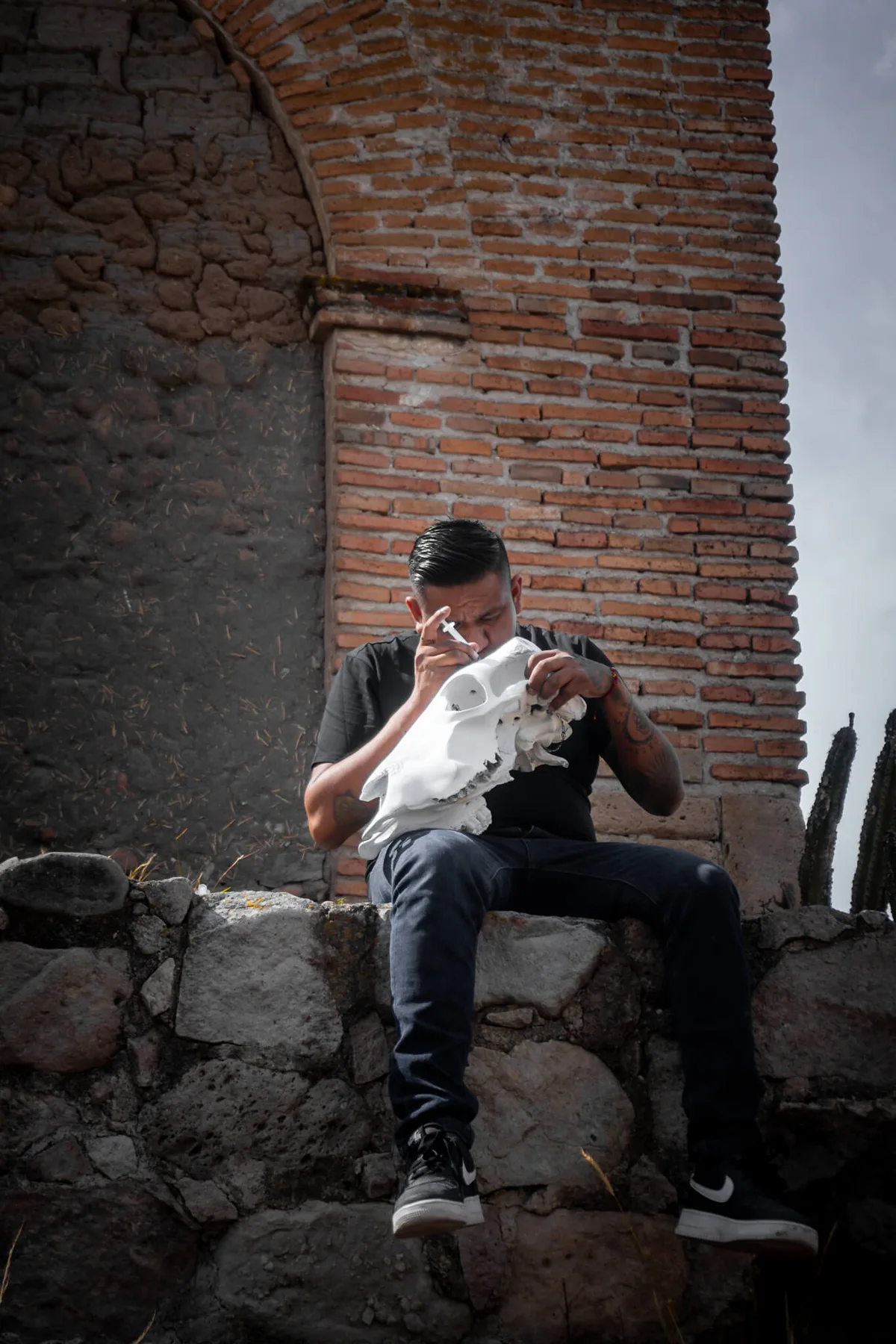
Ricardo began by decorating pan de muerto. In Mitla, these carefully adorned breads are part of the preparations to welcome departed loved ones. Drawing on bread was a way to participate in a tradition shared by his community.
That beginning still lives in his technique: the hand working close to the surface, the line placed with care, and an ordinary material becoming something deeply personal. His art carries that practice into another form.
Watch Ricardo decorate the bread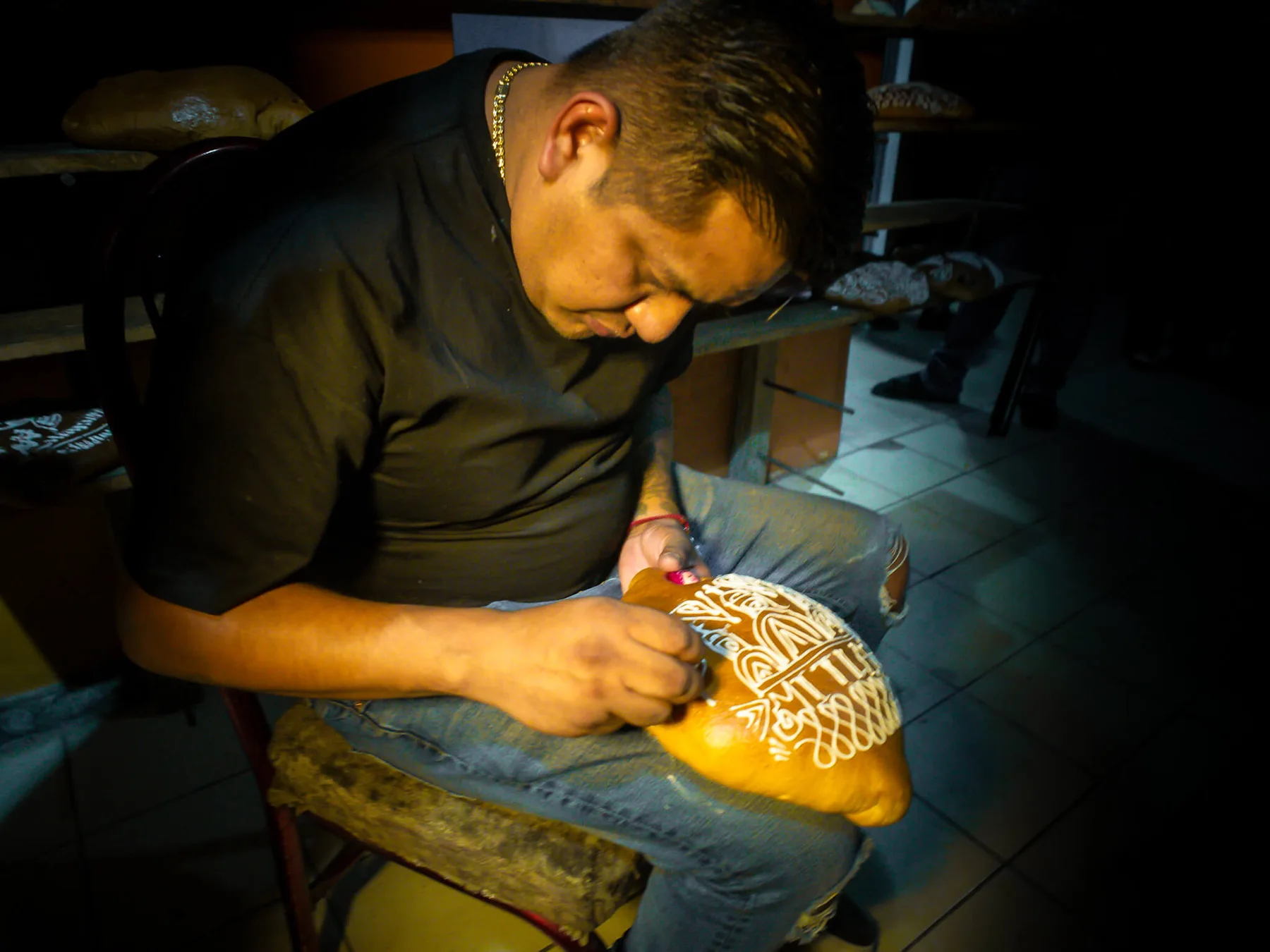
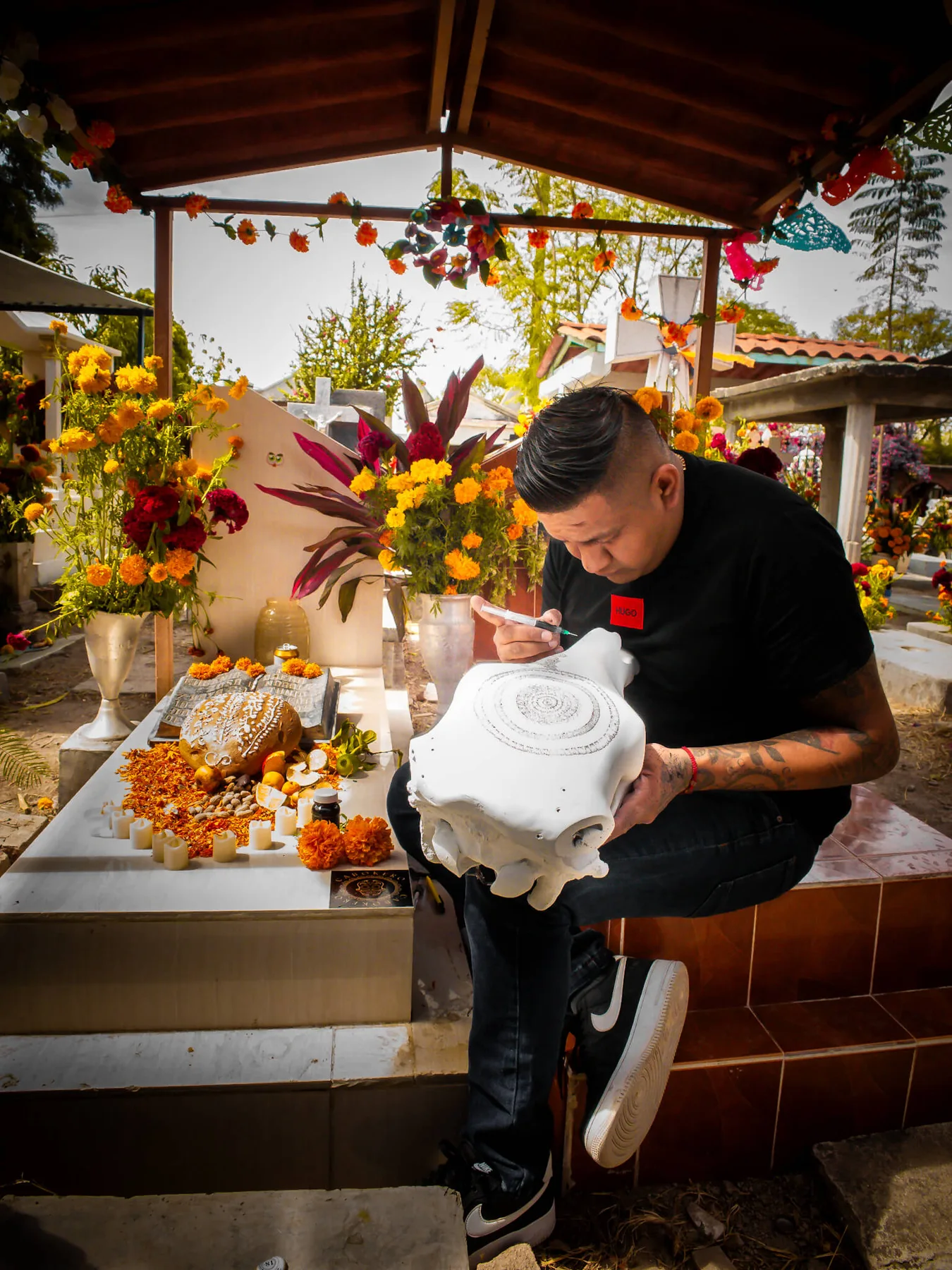 DÍA DE MUERTOS / MITLA
04 / A place for those we love
The offering.
The welcome.
An ofrenda is an offering prepared for loved ones who have died. During Día de Muertos, families make space for their return through food, flowers, light and the things that recall a particular life.
For Ricardo, creating is connected to this act of remembrance. An offering holds affection in a visible form: something made, chosen and placed with intention.
01Pan de muerto+
Food offered with care. In Mitla, decorated bread takes its place on the ofrenda as a welcome to the departed.
02Cempasúchil+
Flowers mark a path of return. Their colour and presence link the family’s preparations with the journey of those being remembered.
03Candles+
Light accompanies the welcome. In Ricardo’s painted vocabulary, the candle also expresses hope, guidance and a connection with ancestors.
04Personal remembrance+
Favourite foods, images and meaningful objects make an offering specific to a life. Traditions vary between families and communities; remembrance gives them their personal centre.
In memory of his father
A year.
A love that remains.
1997 is the year Ricardo’s father died. When this date appears in his work, it carries a personal dedication: a way of keeping his father present.
Placed within the candle, the number becomes part of an offering. The Mexican tradition of remembering the departed meets a very personal memory, held in a few small marks.
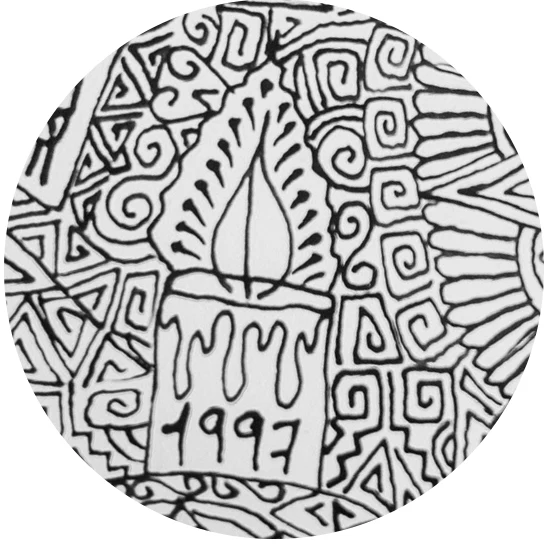
The actual painted detail: a candle bearing the year 1997.
A belief passed down
A spirit
of protection.
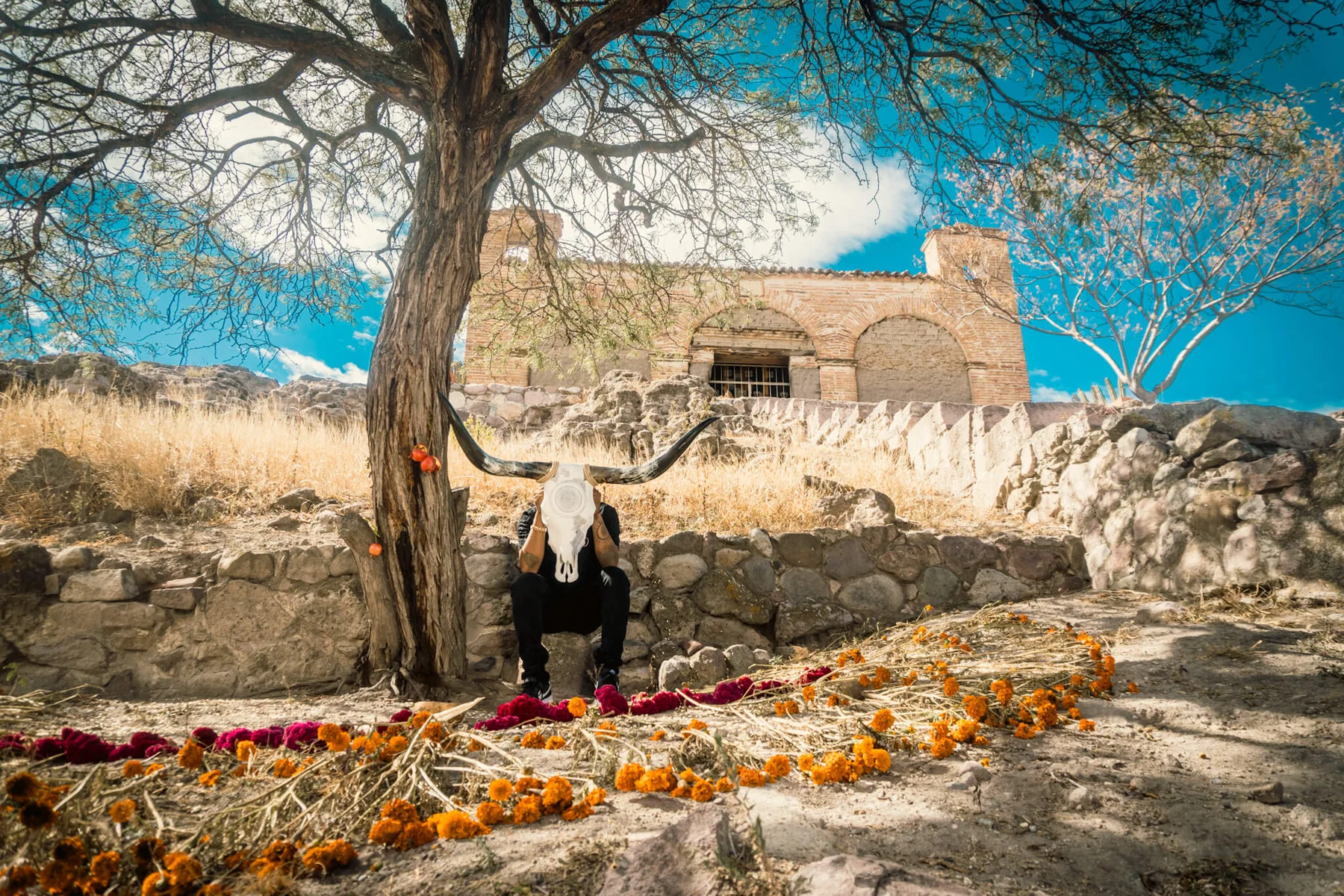
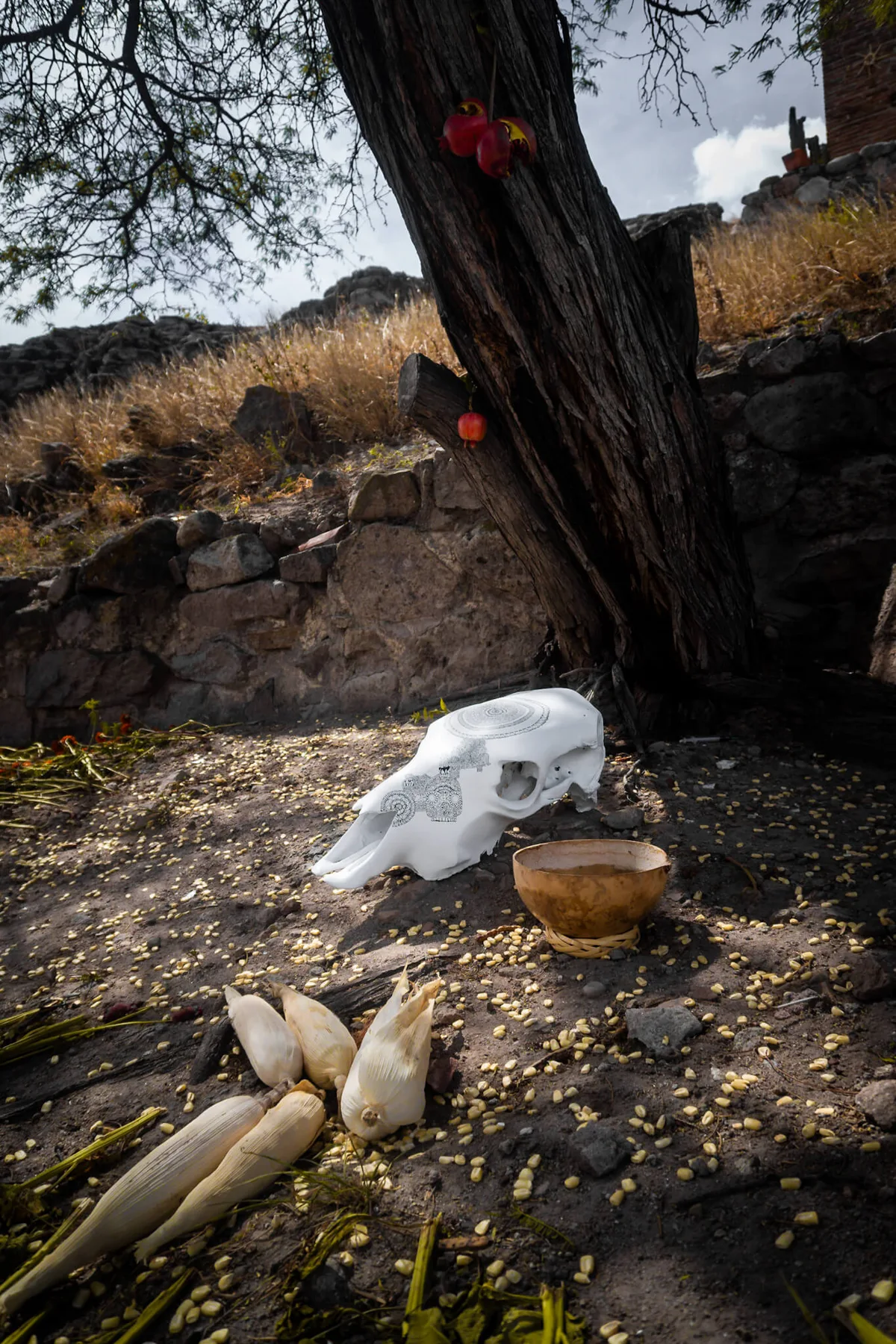
In the tradition Ricardo describes learning from his elders, a cow skull found after the animal’s natural death is regarded as a protective presence. It carries a connection with the earth and with the life that came before it.
Ricardo brings this belief into his art. Through painting, the skull becomes a bearer of memory and an intention of harmony for the home that receives it.
This meaning belongs to the cultural inheritance Ricardo shares through his work.
Discover the symbols he paintsEvery symbol
holds a story.
A heart for a lasting connection. A candle for guidance. A flower for those who came before us. Explore the meanings Ricardo and Cabokero give to these forms.
LOVE · TRANSCENDENCE · CONNECTION
Eternal Love
In Cabokero’s symbolism, this heart expresses a pure, sincere love that transcends life and death. A connection between souls, through beginnings, endings and every moment in between.
WATER · EARTH · WIND · FIRE
The Circle of Life
Within Ricardo’s artistic language, the circle gathers four elements: earth for fertility and stability; water for life and purification; air for movement and spiritual connection; and fire for transformation and energy.
REBIRTH · SPIRITUAL CONNECTION · FREEDOM
The Hummingbird
The hummingbird speaks of transformation, resilience and hope. For Cabokero, it represents the sacred continuity of life, blooming again through memory, spirit and love.
PURITY · HOPE · PURIFICATION
The Candle
In Cabokero’s symbolism, the candle represents spiritual light and hope. It offers a sense of peace in darkness, a search for truth and a connection with our ancestors.
ANCESTORS · GUIDANCE · FAMILY UNITY
Cempasúchil Flower
The cempasúchil flower connects the world of the living with those who came before us. Its petals evoke paths of light, the warmth of shared memories and a love that endures through renewal and hope.
FAITH · DIVINE CONNECTION · INNER PEACE
The Temple
The temple expresses a connection with the divine and a place of spiritual refuge. Within Cabokero’s artistic language, it also represents the inner sanctuary we carry within ourselves: a place to nurture and preserve peace.
HARMONY · PROSPERITY · ABUNDANCE
The Fish
The fish represent the flow of life, the generosity of nature and the balance within it. In Cabokero’s symbolism, they carry wishes for harmony, abundance and success in business into their new home.
Enter Ricardo’s
world.
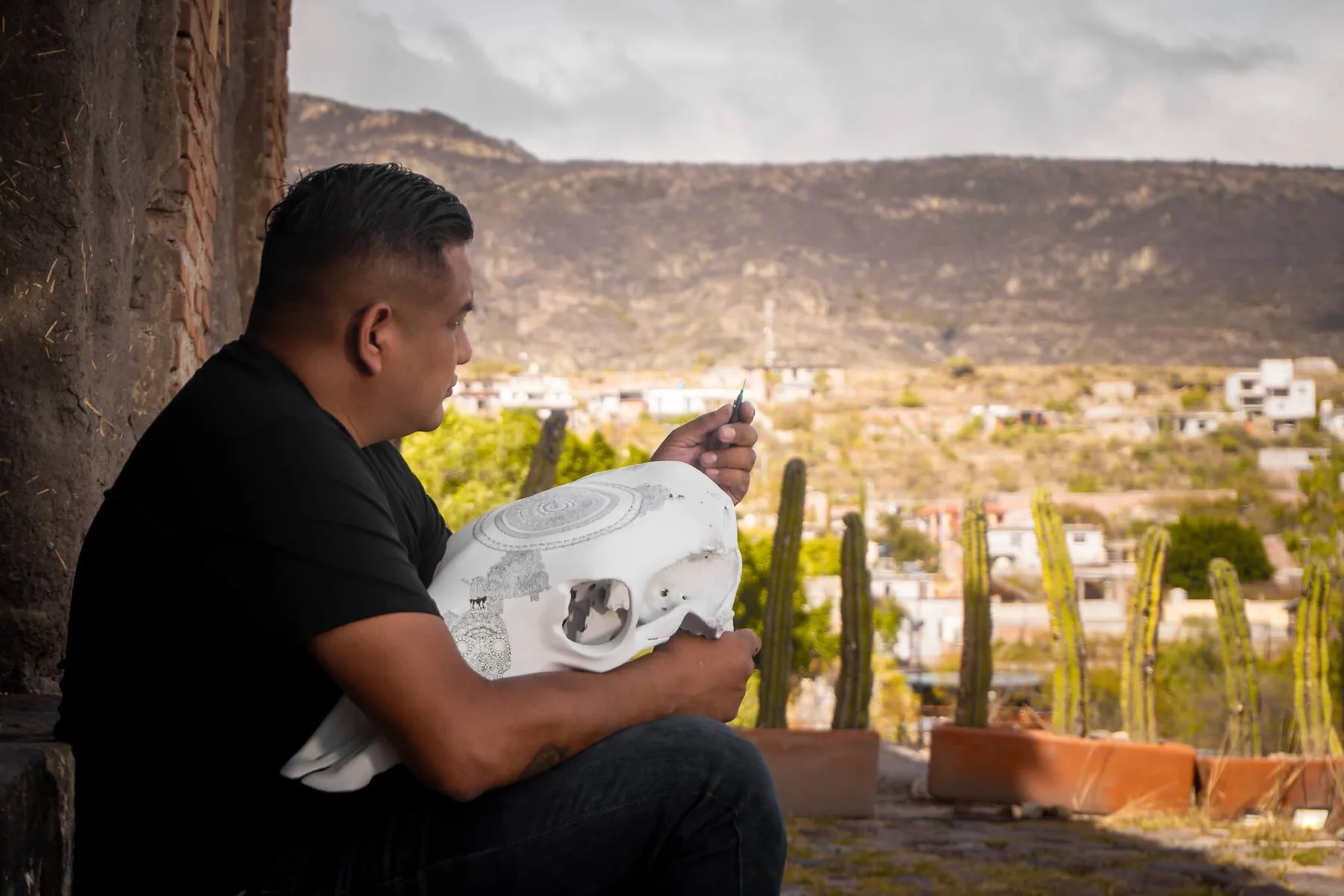
Return to Mitla with Ricardo. Meet the place, the family traditions and the act of making that connect his life to his art.
The story continues
From his roots.
To your story.
The memory of Mitla lives within Ricardo’s work.
A commissioned piece can hold something of your life, too.